Life Insurers' Massive Balance Sheet Revisions Spark Shadow Banking Fears
Major US life insurers have reclassified billions in assets into related-party investments, raising fresh concerns over shadow-banking systemic risks.
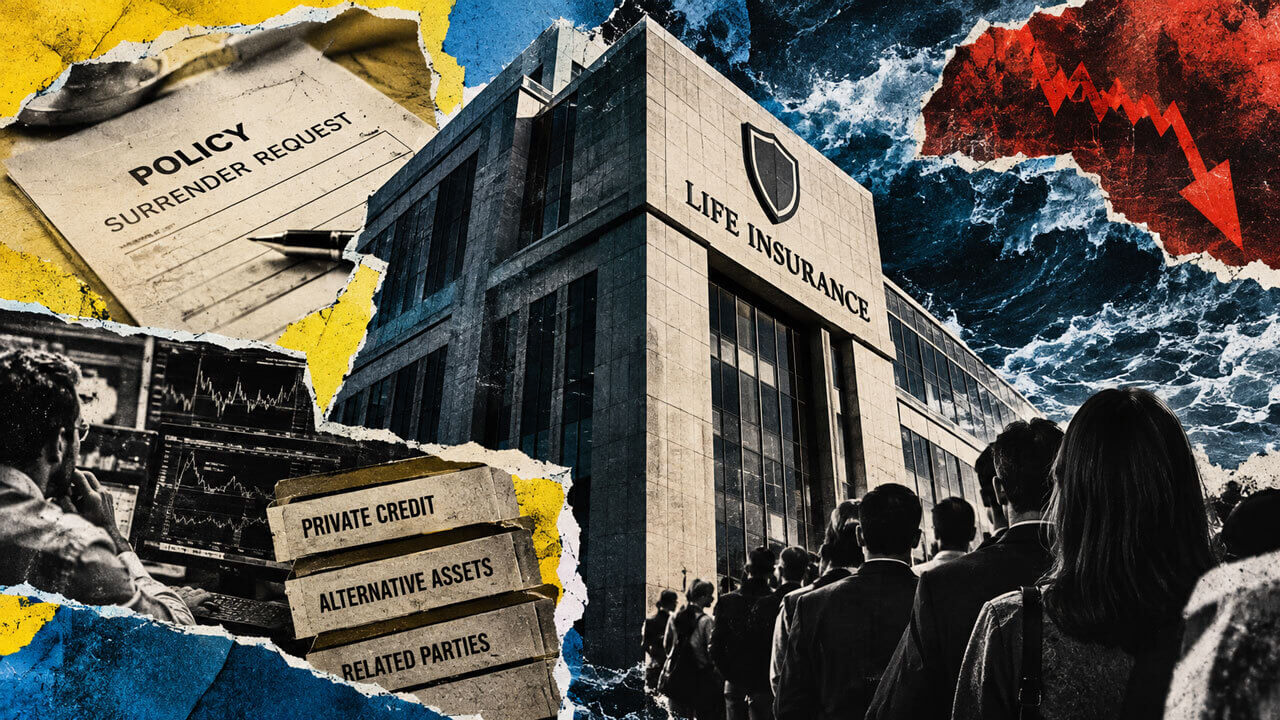
Delaware Life Insurance Company and Clear Spring Life filed notable balance sheet revisions, reclassifying approximately $17 billion of investments into related-party holdings. The correction shifted Delaware Life's related-party exposure from 3% to nearly 39% of total invested assets, drawing intense regulatory scrutiny.
The massive restatements highlight growing opacity within the non-bank financial sector, where private credit and reinsurance agreements increasingly interlink balance sheets. Analysts warn that such concentration in related entities could trigger liquidity bottlenecks during periods of unexpected redemption stress.
Financial markets remain watchful as regulators assess the stability of life insurers' private market allocations. Heightened oversight in traditional shadow banking often prompts tighter capital constraints, potentially influencing broader institutional liquidity flows.
Key takeaways
- Delaware Life reclassified $17B in invested assets into related-party holdings.
- Related-party assets jumped from 3% to 39% of the insurer's total investments.
- Regulators are closely evaluating liquidity and interconnectedness risks in shadow banking.