
Dormant 3-Year Vulnerability Sparks $1.3M Exploit and 10-Day Blockchain Outage
A security flaw overlooked during a 2024 audit triggered a $1.3 million exploit, halting validator consensus for ten consecutive days.
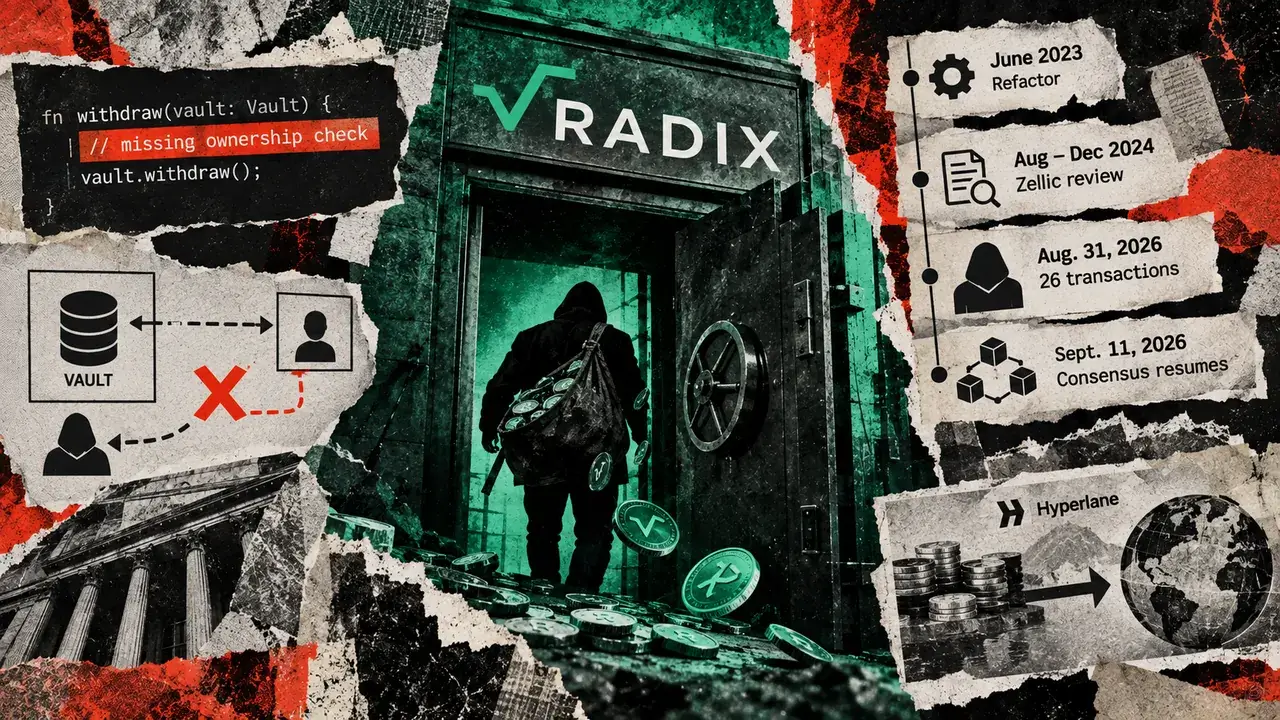
A critical blockchain security exploit resulted in the unauthorized extraction of $1.3 million and triggered an unprecedented 10-day network interruption. The underlying security defect had lingered silently in the codebase for roughly three years before being activated during an attack on August 31, 2026. The breach forced participating network validators to immediately suspend block production and halt transaction finality.
Technical assessments revealed that the compromised code had managed to survive a formal security audit conducted in 2024 without detection, according to CryptoSlate. Attackers identified the logic error and used it to manipulate state balances before validator operators coordinated an emergency shutdown to prevent further capital depletion from decentralized liquidity pools.
The incident underscores persistent vulnerabilities within decentralized infrastructure, particularly regarding legacy codebases that remain active across multiple architectural updates. The length of the operational pause—stretching across ten full days—highlighted the severe operational challenges decentralized communities face when coordinating protocol-level recovery patches under crisis conditions.
Network developers have since deployed remediation patches to neutralize the vulnerability while validators systematically resume node operations. Security analysts emphasize that the prolonged outage and missed audit findings will likely force decentralized networks to implement more stringent continuous auditing practices and automated invariant checks moving forward.
Key takeaways
- A three-year-old dormant codebase flaw resulted in a $1.3 million exploit on August 31, 2026.
- Network validators halted transaction finalization for ten days to resolve the underlying bug.
- The vulnerability had previously gone unnoticed throughout a comprehensive 2024 security review.