
Historical Forestry Study Shows Carbon Recovery After Decades of Regrowth
A reassessment of a 30-year-old forestry project in Australia reveals full carbon recovery and faster growth in managed stands.
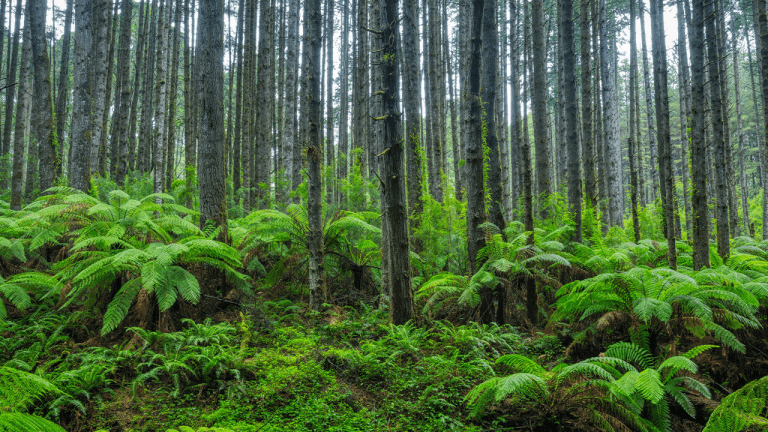
A long-term environmental research experiment has yielded surprising data regarding forest regeneration and carbon storage efficiency. According to Bitcoin.com News, researchers returned to examine the Silvicultural Systems Project plots situated in Tanjil Bren, Victoria, discovering that mountain ash forest stands subjected to intensive thinning decades ago developed individual tree trunk diameters roughly 20% wider than those in untouched control areas.
More notably, the updated assessment confirmed that over the span of 30 years, these managed timber plots completely recaptured the volume of carbon that had been extracted during the initial harvesting operations back in 1987. The findings, published in the journal Forest Science, provide rare empirical data regarding multi-decade ecological restoration and natural carbon sequestration capabilities.
Researchers originally launched the initiative to observe how different harvesting methods influence regrowth dynamics over extended timelines. Because long-horizon ecological experiments are frequently neglected or defunded before reaching multi-decade milestones, having uninterrupted 30-year field evidence offers crucial real-world modeling data for environmental scientists and climate analysts.
While the study highlights robust ecological resilience, forestry experts emphasize that carbon recapture rates can fluctuate significantly depending on local rainfall, soil health, and specific species biology. Analysts will continue watching how these empirical benchmarks influence future commercial forestry frameworks and voluntary environmental accounting standards worldwide.
Key takeaways
- Thinned mountain ash plots produced trees with 20% larger diameters than unmanaged controls.
- Managed forest tracts fully recovered all carbon removed during harvest within a 30-year span.
- The empirical findings provide rare multi-decade data for ecological modeling and carbon accounting.